
We humans may have beaten the odds.
MARK GARLICK/SCIENCE PHOTO LIBRARY//Getty Images
- A group of scientists has just proposed a brand new equation aiming to figure out the probability of intelligent life occurring in our universe.
- The equation is structured around two basic ideas: star formation and dark energy.
- It turns out that we may have beaten the odds—our own universe may not have been the most likely place for life to occur.
How many intelligent civilizations exist throughout the universe? That’s the question that the famous Drake Equation was created to answer. Devised by astrophysicist Frank Drake in 1961, the Drake Equation uses parameters like rate of star formation, number of planets per star, and length of time a civilization could have been beaming information out into space to try and find a probabilistic estimate for just how not-alone we are in the cosmos.
Now, a new study—published in the journal Monthly Notices of the Royal Astronomical Society—aims to take that idea one step further with a probabilistic equation that is essentially the Drake Equation 2.0. But it’s doing things a bit different—it’s using the driving conditions that control our universe to extrapolate the odds of intelligent life instead of just looking at the results that those conditions have already borne out.
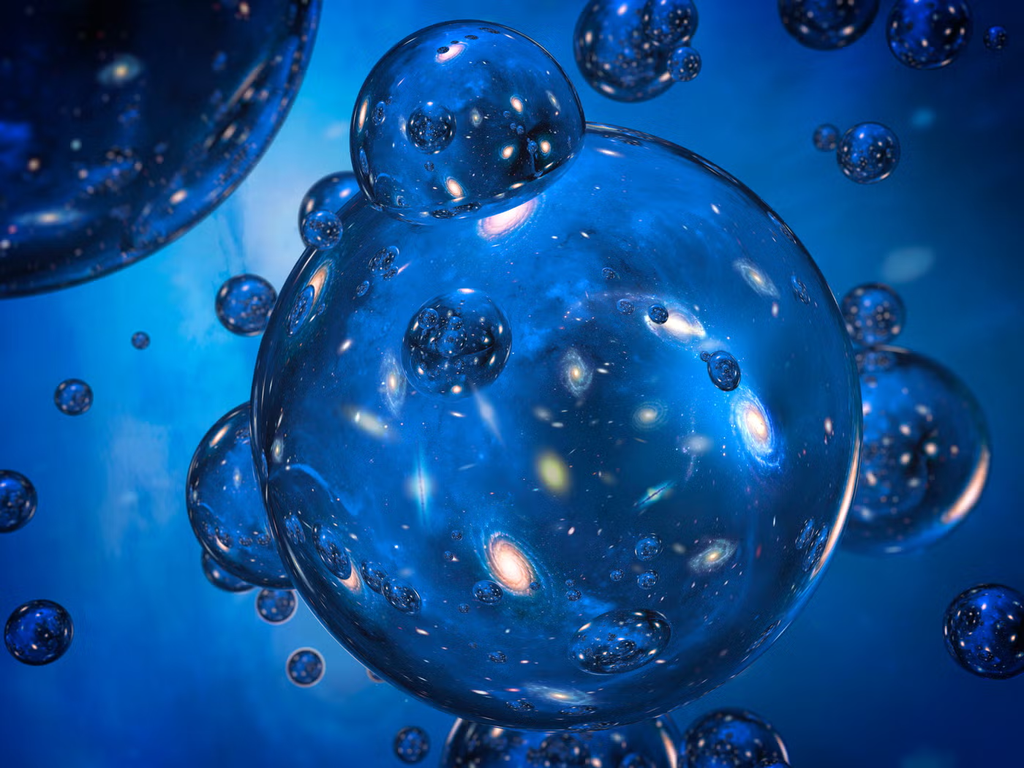
And it’s not stopping there. This team pushed out into the hypothetical multiverse with their equation to try and see what universal conditions would be best for intelligent life. Spoiler alert: it’s not ours.
The model hinges on two major ideas: dark energy and star formation. Starting with the latter, star formation is the absolute baseline for life to evolve as we know it. Life needs energy, and the amount of energy needed to power a civilization would need (as far as we know) to come from a star. Also, planets tend to form from the debris that hangs round after star formation, and all life needs a place to land.
Returning to the former, dark energy is thought to be the engine behind the accelerated expansion of the universe. While we can’t observe it directly, experts believe it makes up about 68 percent of everything in the cosmos. As such, it has a significant impact on exactly what happens and where—including how many stars form out of the vastness of all of the normal matter (called baryonic matter) in the universe.
Read More – A New Formula Reveals That Alien Life Might Form in Unlikely Realities
Leave a Reply